SERVICE ABOVE SELF

Rotary is a global network of more than 1.2 million neighbors, friends, leaders, and problem-solvers who see a world where people unite and take action to create lasting change – across the globe, in our communities, and in ourselves.

History

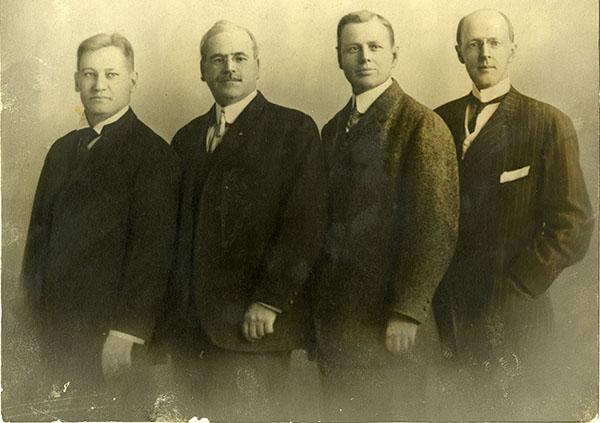
Rotary started with the vision of one man, Paul Harris. The Chicago attorney formed the Rotary Club of Chicago on 23 February 1905, so professionals with diverse backgrounds could exchange ideas and form meaningful, lifelong friendships.

1905-1911
Founding Years

Starting with the first club meeting in 1905, our founding years focus on building an organization that encourages community connections based on friendship and service.
Read More: 1905 - 1911

1912 - 1930
Expanding Our Reach

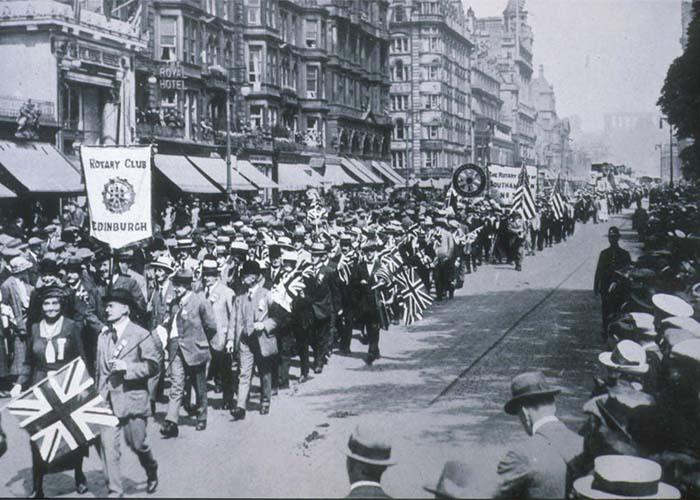
During the next few decades, Rotary’s presence expands to new lands. The creation of The Rotary Foundation encourages members to think about Rotary’s role in serving the needs of communities in the present and in the future.
Read More: 1912 - 1930

1931 - 1957
Cultivating Leaders

As Rotary clubs continue to spread around the world, we establish ourselves as leaders in international cooperation. Within the organization, we change our governance structure to give members a greater voice in leading Rotary.
Read More: 1931 - 1957

1958-1984
Global Service

We create programs that emphasize leadership through local and global service.

Read More: 1958-1984

1985-2004
Bold Goals

We establish some of our most ambitious programs and partnerships. Building peace and fighting polio take on increased importance as we look for ways to make a lasting impact.
Read More: 1985-2004

2005-Present
Focusing Our Impact

As we look to the future, we continue to build on Rotary’s core values and develop dynamic partnerships to create lasting, positive change in communities worldwide. A cause-driven approach to Foundation grants increases our impact.
Read More: 2005-present

Areas of Focus

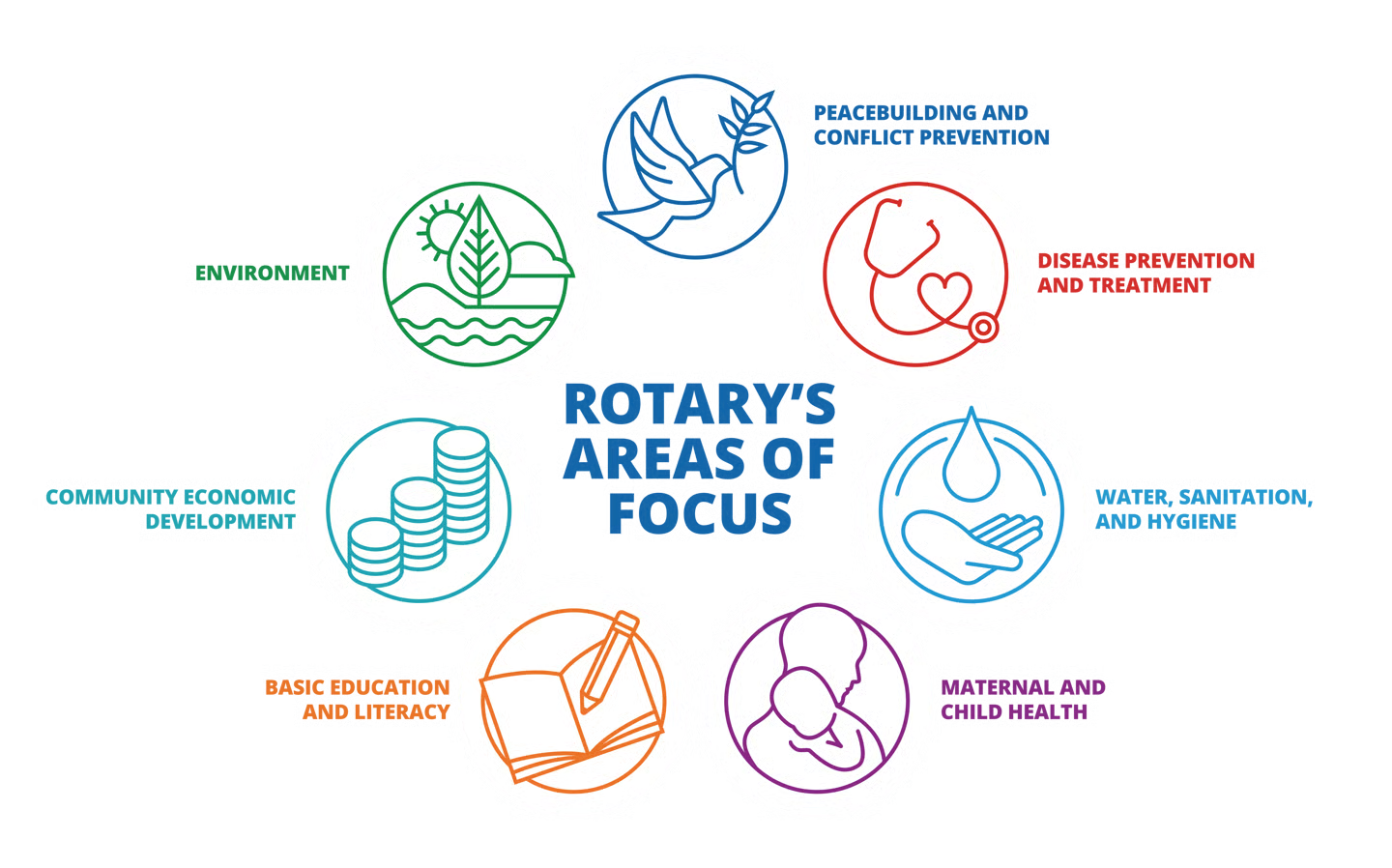
Rotary’s Areas of Focus are seven priority categories that guide all Rotary service projects worldwide. These areas represent the most urgent and persistent issues facing communities, and they help clubs like ours create structured, meaningful and measurable impact.

The Four-Way Test

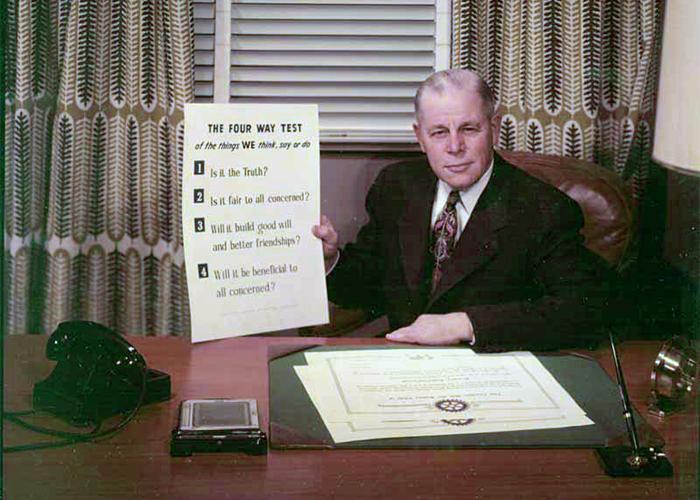
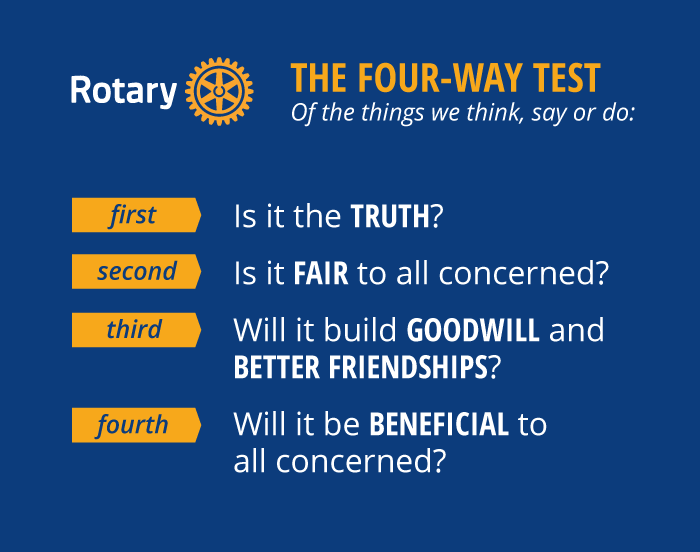
The Four-Way Test is a nonpartisan and nonsectarian ethical guide for Rotarians to use for their personal and professional relationships. The test has been translated into more than 100 languages, and Rotarians recite it at club meetings